Knee pain is common at every age and it is usually not a sign of lasting damage. Most knee problems settle well with an accurate assessment, targeted strengthening and a sensible plan for getting back to the activities you enjoy.
Knee pain is discomfort in or around the knee joint, including the kneecap, tendons, ligaments and the meniscus cartilage. The most common causes are patellofemoral pain, often called runner's knee, tendinopathy, meniscus irritation, ligament sprains and early osteoarthritis. Most of these improve with physiotherapy, without injections or surgery.
Because a kneecap problem, a tendon problem and a meniscus problem each need a different plan, treatment at New Ray starts with working out which structure is actually driving your pain. From there we focus on settling symptoms, rebuilding strength through the hip and thigh, and guiding you back to full activity.
Physiotherapy for knee pain is covered by most extended health plans, and most do not require a doctor's referral. If your knee was injured in a car accident or at work, ICBC and WorkSafeBC claims apply, and ICBC pre-approves up to 25 physiotherapy visits. We bill all of these directly.

Knee pain shows up differently depending on the structure involved. Where you feel it, and what makes it worse, gives us useful clues about the likely cause.
Aching at the front, worse on stairs, squats or after sitting
A pinch or ache at the side, often with twisting
The knee feels tight first thing or after sitting still
Mild swelling that builds with activity and settles overnight
Noisy knees are common and usually not a sign of damage
The knee feels unsteady on stairs, slopes or uneven ground
A small number of knee presentations need medical assessment before physiotherapy. Seek prompt medical care, rather than booking with us first, if you notice any of the following.
Most knee pain follows one of a few recognizable patterns. A careful assessment tells us which one applies to you.
Pain around or behind the kneecap, aggravated by stairs, squatting, running and long periods of sitting. It usually reflects how the kneecap is being loaded rather than damage to the joint, and it responds well to strengthening the hips and thighs.
Most commonPatellar or quadriceps tendon pain just below or above the kneecap, common in runners and jumping sports. Tendons dislike sudden spikes in training, and treatment centres on graded loading that rebuilds the tendon's capacity to handle work.
The meniscus is the knee's shock-absorbing cartilage. It can be irritated by twisting or by gradual wear, causing joint-line pain and catching sensations. Most meniscus problems improve with exercise-based rehab rather than surgery.
A twist, awkward landing or collision can sprain the MCL, ACL or other ligaments. Mild sprains settle with progressive rehab, and many more significant sprains also do well with a structured strengthening program.
Gradual cartilage change is a normal part of ageing and does not always hurt. When it does, strengthening, activity modification and weight management are the recommended first-line treatments, and many people manage well without surgery.
Knees adapt to what you ask of them. A new sport, a jump in running distance or a season of hiking can outpace that adaptation and irritate otherwise healthy structures until load and strength are rebalanced.
We test how your knee moves and handles load, check the hip and ankle above and below it, and identify which structure is driving your pain.
You leave your first visit knowing what is going on, what to expect and what you can safely keep doing. Clear answers reduce worry and support progress.
Manual therapy and soft tissue techniques help settle pain and swelling and restore comfortable movement while the strengthening work takes effect.
A progressive program for the thigh, hip and calf rebuilds the knee's capacity, with guidance on training load so the problem is less likely to return.
It depends on the diagnosis. Simple flare-ups often settle within a few weeks, patellofemoral pain and tendinopathy typically improve over 6 to 12 weeks of consistent strengthening, and ligament injuries can take several months. Your physiotherapist will give you an honest timeline at your first visit.
Your plan is built around your diagnosis and your goals, and it may draw on several of the clinic's services.
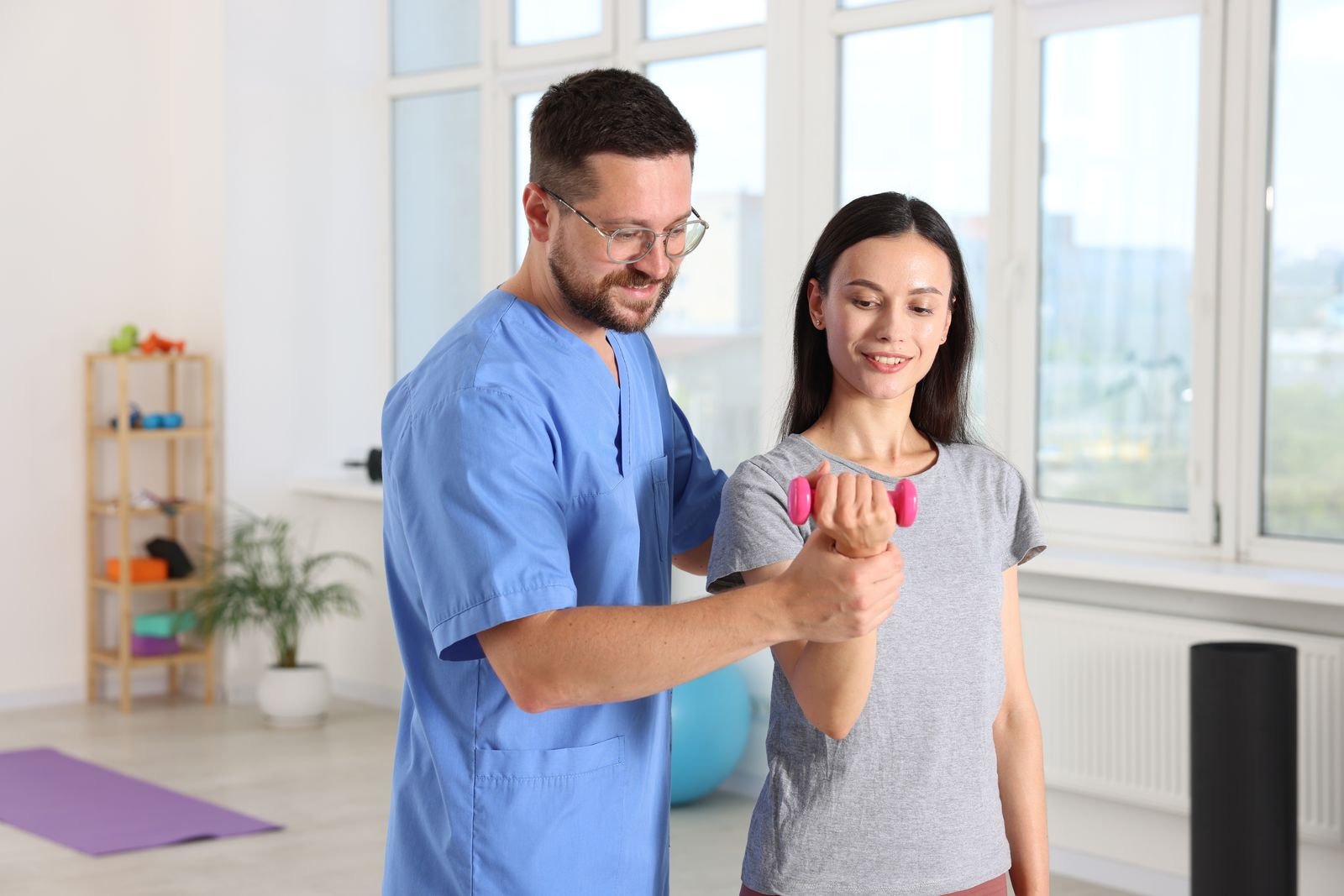
Exercise-based rehab is the foundation of knee care, combining manual therapy, targeted strengthening and a graded return to sport and daily activity.
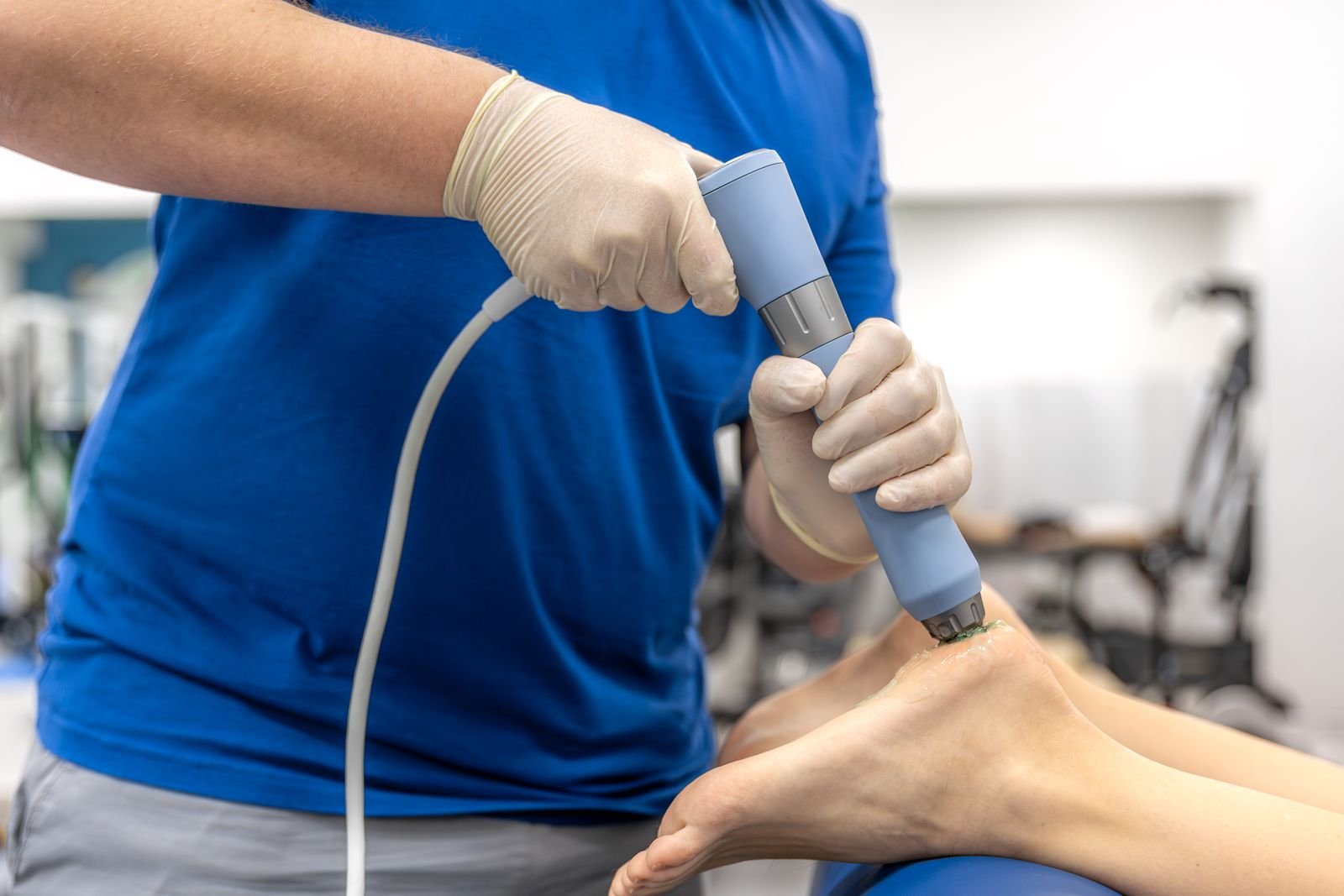
Focused acoustic waves that can help stubborn patellar tendinopathy when loading exercises alone have not been enough, used alongside a strengthening program.
Fine needles release tight, overactive muscles in the thigh and hip that can change how the kneecap tracks and loads.
Registered massage therapy eases tension in the quadriceps, hamstrings, calves and iliotibial band, reducing the pull on a sore knee.
Supervised active rehab that bridges the gap between early physiotherapy and a full return to running, sport or physically demanding work.
When foot mechanics contribute to knee loading, custom orthotics can reduce strain, particularly for runners and people on their feet all day.


Our friendly team is happy to help. Reach us during clinic hours. We are open 8:00am to 8:00pm on Tuesday and Thursday, and 9:00am to 6:00pm on Monday, Wednesday, Friday, Saturday and Sunday.
Book an appointmentUsually not. Most knee pain can be diagnosed with a clinical assessment, and imaging rarely changes early treatment. If your presentation suggests something that does need a scan, such as a significant ligament tear, we will tell you and communicate with your doctor.
Often, yes, at a modified level. Complete rest tends to make the knee weaker and more sensitive. We usually adjust distance, frequency or intensity so you can stay active while the knee settles, then build back up in stages.
No. Pain with these movements usually reflects sensitivity and load tolerance rather than ongoing damage. As strength improves, most people return to stairs, squats and kneeling comfortably, and we will show you how to modify them in the meantime.
Not on their own. Painless clicking and grinding are common in healthy knees at every age. Noise combined with pain, swelling or stiffness is worth assessing, but sound alone is not a reliable sign of joint damage.
Often. Exercise-based treatment is the recommended first step for most meniscus problems, kneecap pain and early osteoarthritis, and many people improve enough that surgery is no longer considered. If surgery is right for you, strengthening beforehand can support a better recovery.
New Ray Physiotherapy and Health Clinic is open 8:00am to 8:00pm on Tuesday and Thursday, and 9:00am to 6:00pm on Monday, Wednesday, Friday, Saturday and Sunday in Abbotsford, with direct billing to ICBC, WorkSafeBC and most extended health plans.