Arthritis is wear and change in a joint, not a life sentence. We cannot reverse those changes, but with the right exercise plan most people move better and hurt less, often much less.
Osteoarthritis is the most common form of arthritis. It develops gradually as the cartilage and bone in a joint change over years, most often in the knees, hips and hands. Almost everyone over fifty has some of these changes on a scan, yet many have little or no pain.
That gap between the picture and the pain is good news. Joint changes cannot be reversed, but pain and stiffness respond well to graded exercise, strength work and hands-on care. Most people who stay active with a structured plan report less pain and better function within weeks.

Physiotherapy for arthritis is covered by most extended health plans, and no doctor referral is needed for most of them. Where an ICBC or WorkSafeBC claim applies, we bill the insurer directly. ICBC pre-approves up to 25 physiotherapy visits, and we direct bill so you are not left with paperwork.

Osteoarthritis tends to come on slowly and follow a pattern. Symptoms often flare and settle, and stiffness after rest is one of the most telling signs.
Joints feel stiff on waking, usually easing within thirty minutes
Aching in the knee, hip or hands during or after use
The joint feels tight after rest and loosens with movement
Creaking sensations in the joint, common and rarely harmful
Mild puffiness around the joint after a busy day
The knee or hip feels less steady on stairs or slopes
A small number of presentations need immediate medical attention rather than physiotherapy. See a doctor or emergency department promptly if you notice any of the following.
Osteoarthritis rarely has a single cause. It usually reflects a mix of age, load history and individual factors.
Cartilage and bone slowly remodel over decades, and by mid-life most joints show some change. This is a normal part of aging, and the amount of change on a scan often has little relationship to how much pain a person feels.
Most commonA significant knee, hip or hand injury earlier in life, such as a fracture or ligament tear, changes how the joint absorbs load and raises the chance of osteoarthritis developing in that joint years later.
Weak muscles around a joint, especially the thigh muscles at the knee, leave more of every step's load on the joint surfaces. Strengthening those muscles is one of the most effective ways to reduce arthritic pain.
Higher body weight increases the load through the knees and hips with every step. Even modest weight change, combined with strengthening, often makes a meaningful difference to daily pain levels in the lower limbs.
Osteoarthritis, particularly in the hands, runs in families. Genetics influence cartilage quality and joint shape, which is partly why some people develop symptoms earlier than others with similar activity levels.
Years of heavy, repetitive work such as kneeling, squatting or gripping can contribute to changes in specific joints. Pacing strategies and targeted strength work help these joints tolerate the demands of the job.
We assess the affected joints, your strength, movement and daily demands, and screen for signs that need medical review. You leave the first visit knowing what is driving your symptoms and what is safe to do.
We explain what osteoarthritis is and, just as importantly, what it is not. Movement does not wear the joint out faster. Understanding this helps most people move with far more confidence and less fear.
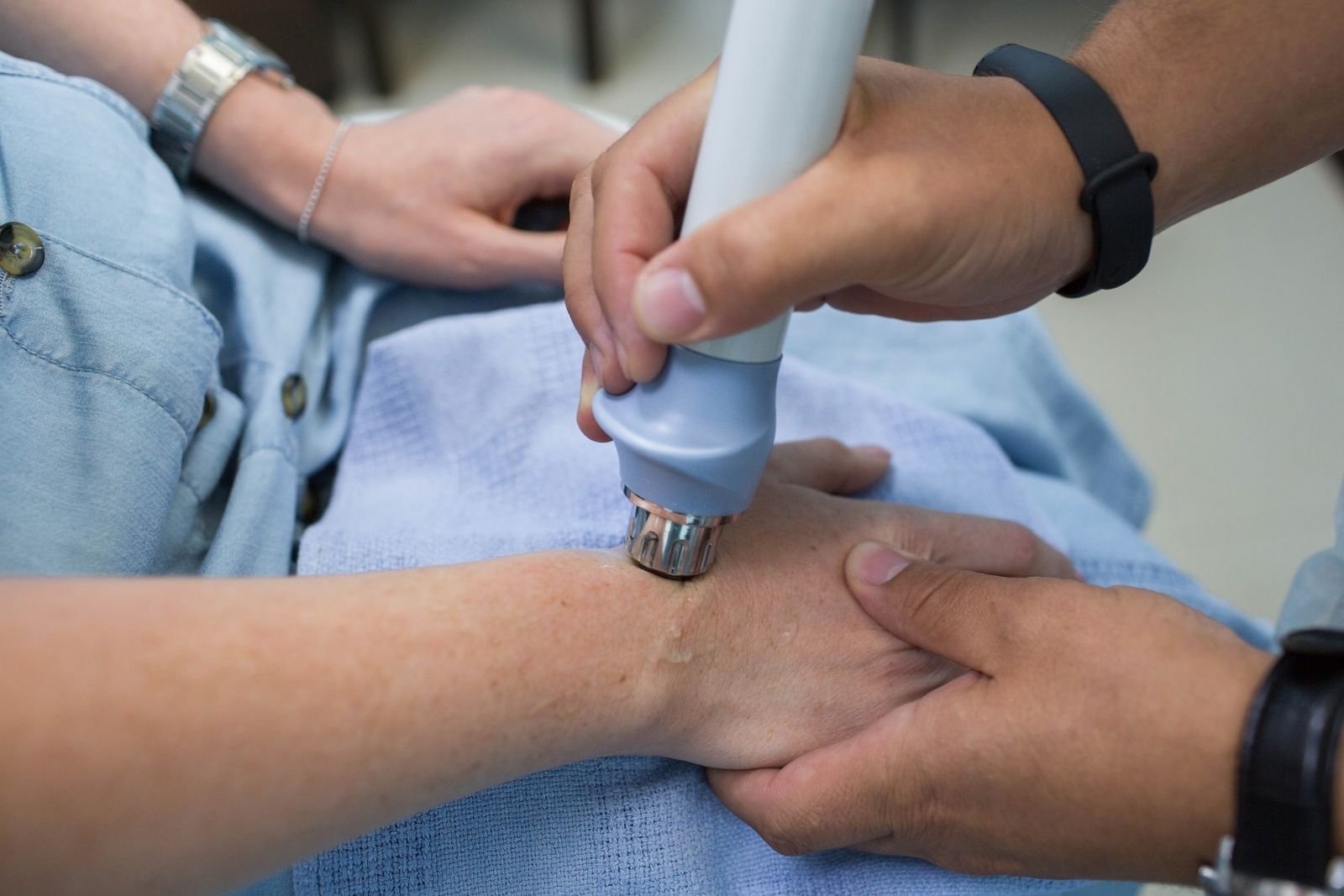
Manual therapy, laser therapy and other adjuncts can ease pain and stiffness so exercise feels more doable. These support the plan rather than replace it, and we are honest about what each one can offer.
A progressive strengthening program tailored to your joints and goals, with pacing strategies for flare-ups. The aim is a routine you can keep doing on your own, with check-ins as your capacity grows.
Arthritis is managed rather than cured, so we talk about improvement instead of recovery. Most people notice less pain and easier movement within six to twelve weeks of consistent, graded exercise. Benefits build the longer the routine continues, and flare-ups usually settle faster with a plan.

Care is built around exercise, with adjunct treatments chosen to fit your joints, symptoms and goals.
Guideline-based first-line care: graded strengthening, mobility work and education tailored to your knees, hips or hands, progressed as your capacity improves.
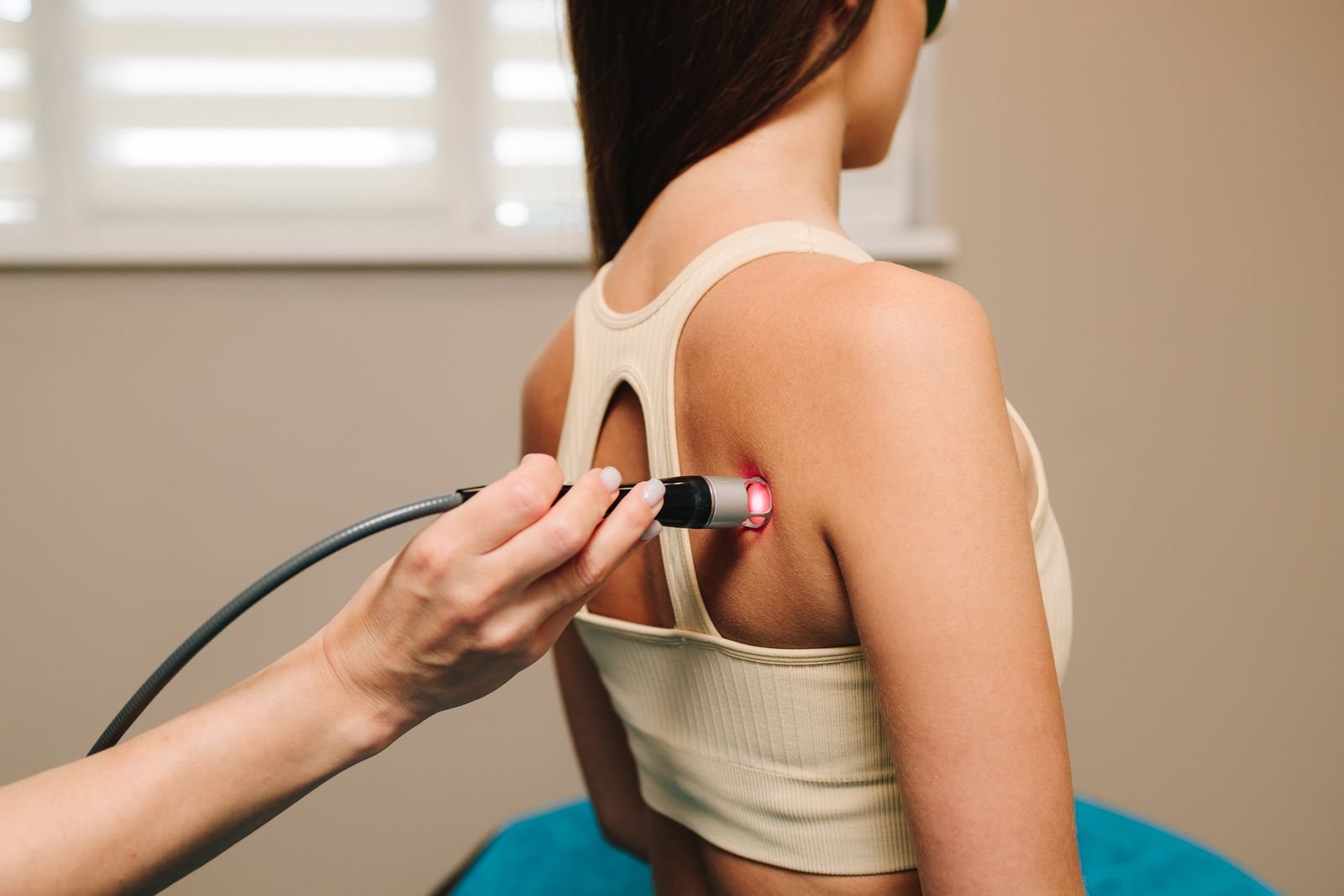
Low-level laser applied to the affected joint may help settle pain and irritation, making it easier to stay consistent with exercise.
Supervised active rehabilitation that builds strength and confidence over time, useful for turning early gains into a lasting exercise habit.
Registered massage therapy eases tight, guarded muscles around arthritic joints, which often reduces the ache that builds through the day.
Fine needles used to help modulate pain around the affected joint, an option some patients find helpful alongside their exercise program.
Joint mobilization and hands-on treatment to improve how stiff regions move, supporting comfort in the spine, hips and surrounding areas.


A gentle adjunct that may help calm arthritic joint pain and stiffness.
Learn more

Supervised active rehab to build lasting strength around arthritic joints.
Learn moreOur friendly team is happy to help. Reach us during clinic hours. We are open 8:00am to 8:00pm on Tuesday and Thursday, and 9:00am to 6:00pm on Monday, Wednesday, Friday, Saturday and Sunday.
Book an appointmentNo, and we will never tell you otherwise. The changes inside the joint cannot be undone. What usually can change is your pain, stiffness and strength, and those are what determine how the joint feels and functions day to day.
No. This is one of the most common worries we hear, and the research is reassuring. Appropriate, graded exercise does not speed up joint damage. It strengthens the muscles that protect the joint and is the most consistently effective treatment for osteoarthritis.
Usually not. Osteoarthritis can be assessed clinically, and scan findings often match age more than symptoms. If your assessment suggests imaging or a medical review would change the plan, we will say so and help arrange it through your doctor.
Many people with knee or hip osteoarthritis never need surgery. Guidelines recommend a proper trial of exercise-based care first, and many people improve enough to delay or avoid a replacement. If surgery does become the right option, strong muscles beforehand tend to help afterwards.
Most extended health plans cover physiotherapy without a doctor's referral, and we direct bill most major insurers. If your arthritis relates to an ICBC or WorkSafeBC claim, we bill them directly as well. Our Abbotsford clinic is open 8:00am to 8:00pm on Tuesday and Thursday, and 9:00am to 6:00pm on Monday, Wednesday, Friday, Saturday and Sunday.
Book an arthritis assessment at our Abbotsford clinic. Open 8:00am to 8:00pm on Tuesday and Thursday, and 9:00am to 6:00pm on Monday, Wednesday, Friday, Saturday and Sunday, with direct billing to most extended health plans, ICBC and WorkSafeBC.