
New Ray Physiotherapy and Health Clinic
Unit 310, 32700 South Fraser Way, Abbotsford BC · 604-744-0555

Hand and wrist pain treatment in Abbotsford

Hand and wrist pain can make everyday tasks frustrating, but it is rarely serious. Most cases settle well with the right assessment, hands-on treatment and a gradual return to normal use.

About hand and wrist pain

Common, disruptive and usually very treatable

Hand and wrist pain covers a range of conditions, from carpal tunnel syndrome and De Quervain's tenosynovitis to simple sprains and repetitive strain from desk work. Because we use our hands for almost everything, even minor irritation can feel very disruptive. The encouraging news is that most of these problems respond well to conservative treatment.

At New Ray Physiotherapy and Health Clinic in Abbotsford, we start by identifying which structure is actually driving your pain, whether that is a nerve, a tendon or a joint. Treatment then combines hands-on techniques, activity changes and gradual strengthening, and most people are able to manage their symptoms without injections or surgery.

Physiotherapist assessing a patient's wrist and hand at New Ray Physiotherapy and Health Clinic in Abbotsford
A thorough assessment pinpoints whether a nerve, tendon or joint is driving your symptoms.
Good to know, fees & coverage

Physiotherapy for hand and wrist pain is covered under most extended health plans, and we bill your insurer directly whenever your plan allows it. If your pain follows a car accident or workplace injury, ICBC or WorkSafeBC coverage may apply, and ICBC pre-approves up to 25 physiotherapy visits.

Symptoms

What hand and wrist pain feels like

Symptoms depend on which structure is involved. Nerve problems tend to cause numbness and tingling, while tendon and joint problems cause pain with movement. Common patterns include:

Night-time numbness and tingling

Pins and needles in the thumb and fingers that wake you.

Thumb-side wrist pain

Sharp pain when gripping, lifting or twisting the wrist.

Weak or clumsy grip

Dropping objects or struggling to open jars and turn keys.

Aching after desk work

A dull ache that builds through the day at the keyboard.

Morning stiffness

The wrist or fingers feel tight and slow to get moving.

Swelling or tenderness

Localized puffiness or soreness over the wrist or tendons.

When to seek urgent medical care instead

A small number of hand and wrist presentations need prompt medical attention rather than physiotherapy first. See a doctor or urgent care right away if you notice:

  • Constant numbness in the fingers that no longer comes and goes
  • Visible wasting or flattening of the muscles at the base of the thumb
  • A fall or injury followed by obvious deformity or an inability to move the wrist
  • A hot, swollen joint together with fever or feeling generally unwell
Causes

What tends to cause hand and wrist pain

Most hand and wrist pain traces back to a handful of causes, and a careful assessment tells them apart.

01

Repetitive strain from desk work

Long hours of typing and mouse use load the same small tendons thousands of times a day. Without regular breaks and a good workstation setup, the tendons and their sheaths become irritated and increasingly painful.

Most common
02

Carpal tunnel syndrome

The median nerve becomes compressed as it passes through the narrow tunnel at the front of the wrist, causing numbness, tingling and weakness in the thumb, index and middle fingers, often worse at night.

03

De Quervain's tenosynovitis

The tendons that move the thumb become irritated where they pass over the thumb side of the wrist. Gripping, twisting or lifting a baby becomes sharply painful, and it is especially common in new parents.

04

Wrist sprains

A fall onto an outstretched hand can overstretch the ligaments that hold the wrist bones together. Most sprains heal well, but pain that persists after a fall deserves an assessment to rule out a fracture.

05

Arthritis

Osteoarthritis commonly affects the base of the thumb and the small joints of the fingers, causing a deep ache, stiffness and reduced grip strength that tends to build gradually over months and years.

06

Sports and manual work

Racquet sports, climbing, weight training and trades involving repeated gripping or vibration can overload the wrist tendons, leading to pain that builds during activity and lingers afterwards, especially when workloads increase quickly.

Physiotherapist guiding a patient through wrist and grip strengthening exercises
4–8 weeksTypical improvement for most wrist and hand conditions
How we treat it

Your treatment, step by step

1

Assessment

We test the nerves, tendons and joints of your hand and wrist, and check your neck too, since nerve symptoms in the hand sometimes start there.

2

Explanation

You leave your first visit knowing what is driving your pain, what to expect and which activities to modify while the tissue settles.

3

Hands-on treatment

Manual therapy, soft tissue work and, where appropriate, bracing or splinting calm irritated tissue and take pressure off the affected nerve or tendon.

4

Gradual loading and prevention

A progressive strengthening program restores grip and wrist strength, while workstation and technique changes reduce the chance of the problem returning.

How long does recovery take?

Most sprains and mild tendon irritations settle noticeably within four to eight weeks. Carpal tunnel symptoms and longer-standing tendon problems often need two to three months of consistent care. These are typical timelines, not guarantees, and your therapist will give you an honest estimate after assessing you.

Our approach

Treatments we may use for hand and wrist pain

Your plan is built around your diagnosis and goals. For hand and wrist pain it often draws on these services.

01

Physiotherapy

Joint mobilization, nerve gliding exercises and a graded strengthening program form the core of treatment for most hand and wrist conditions.

02

Shockwave therapy

Focused acoustic waves can help stimulate healing in stubborn tendon problems, such as De Quervain's, that have not settled with rest alone.

03

Laser therapy

Low-intensity laser may help calm inflammation and support tissue healing in irritated tendons and joints, with no downtime after sessions.

04

IMS dry needling

Fine needles release tight forearm muscles that overload the wrist tendons, easing pain linked to gripping and repetitive strain.

05

Acupuncture

Acupuncture can help settle pain and is covered by many extended health plans, with ICBC pre-approving up to 12 visits where a claim applies.

06

Massage therapy

Registered massage therapy releases tension through the forearm and hand muscles, easing the load on painful tendons between physiotherapy visits.

Related services

Services that treat hand & wrist pain

Physiotherapy at New Ray Physiotherapy and Health Clinic in Abbotsford

Physiotherapy

Assessment and treatment for nerve, tendon and joint problems of the hand and wrist.

Learn more
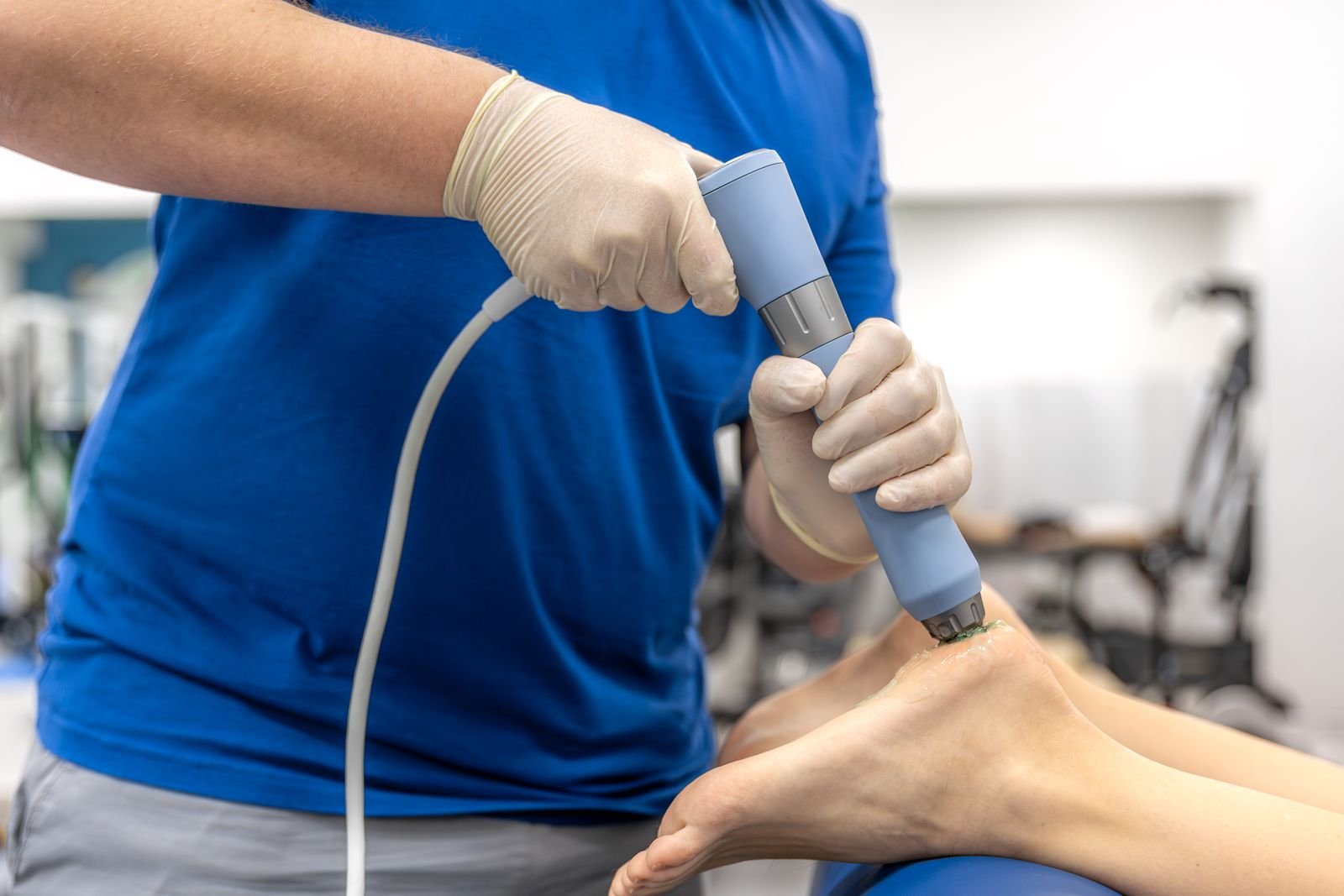
Shockwave Therapy at New Ray Physiotherapy and Health Clinic in Abbotsford

Shockwave Therapy

An evidence-informed option for stubborn tendon conditions that have not settled with rest.

Learn more

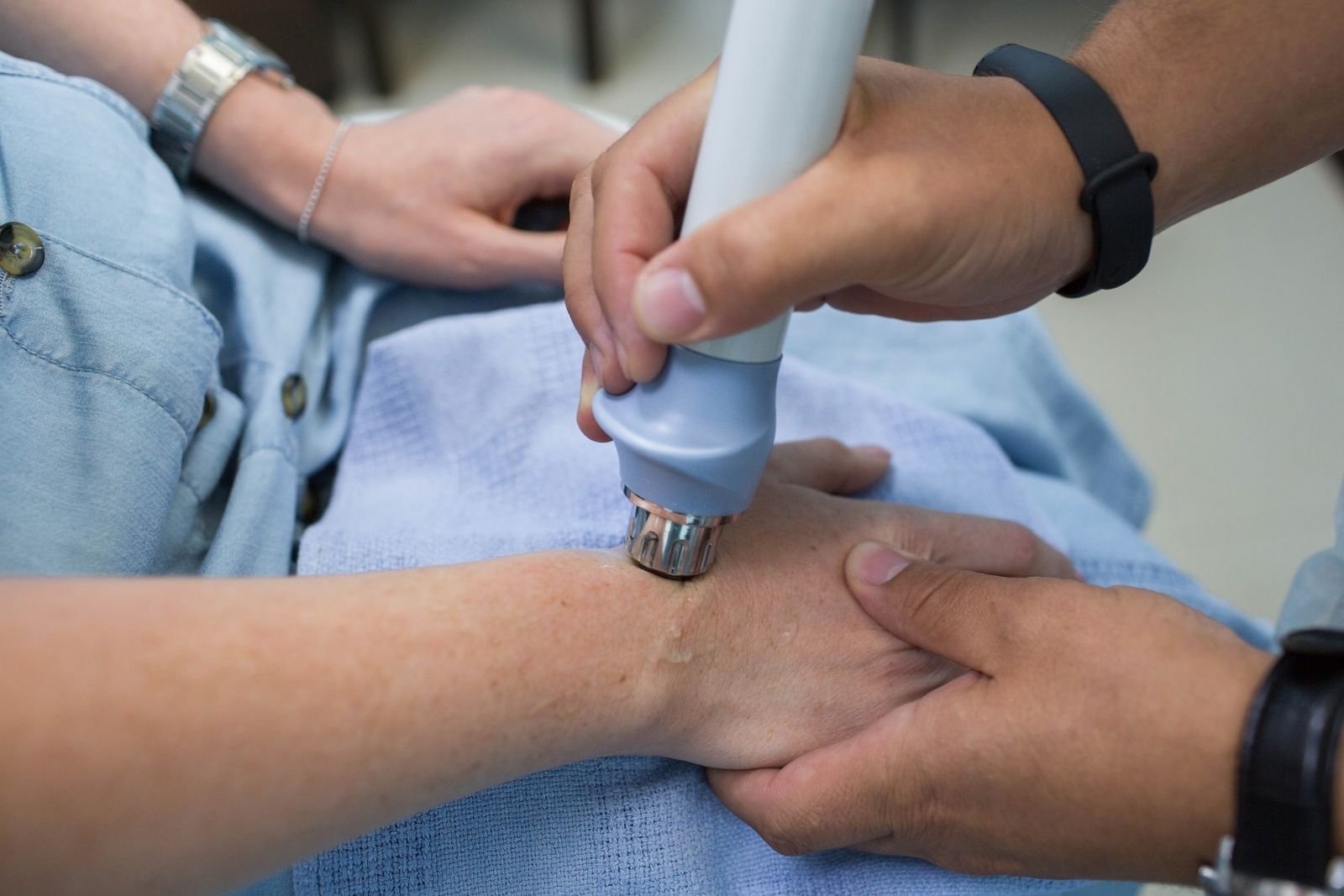
Massage Therapy at New Ray Physiotherapy and Health Clinic in Abbotsford

Massage Therapy

Releases forearm and hand tension that contributes to repetitive strain.

Learn more

Still have a question?

Our friendly team is happy to help. Reach us during clinic hours. We are open 8:00am to 8:00pm on Tuesday and Thursday, and 9:00am to 6:00pm on Monday, Wednesday, Friday, Saturday and Sunday.

Book an appointment
Do I need a doctor's referral to see a physiotherapist?

No. You can book directly with us, and most extended health plans do not require a referral. A small number of plans still ask for one before reimbursing, so it is worth checking yours. ICBC and WorkSafeBC claims also do not need a referral to start physiotherapy.

How do I know if my wrist pain is carpal tunnel syndrome?

Carpal tunnel typically causes numbness and tingling in the thumb, index and middle fingers, often waking you at night. Pain on the thumb side of the wrist with gripping points more toward De Quervain's tenosynovitis. An in-person assessment can usually tell the difference.

Will I need surgery for carpal tunnel syndrome?

Most mild to moderate cases improve with conservative care such as night splinting, nerve gliding exercises and activity changes. Surgery is usually considered when numbness becomes constant or the thumb muscles weaken. If your signs point that way, we will refer you back to your doctor.

Can I keep working at my desk while I recover?

Usually yes. Complete rest is rarely necessary or helpful. We will help you adjust your workstation, typing habits and break schedule so your tendons get relative rest while you keep working, then build strength so the same setup stops causing trouble.

Should I wear a wrist brace or splint?

It depends on the diagnosis. A night splint often helps carpal tunnel symptoms, and a thumb spica brace can settle De Quervain's. Braces work best as a short-term tool alongside treatment rather than a long-term fix, and we can advise on the right one for you.

Ready when you are

Book an assessment in Abbotsford

New Ray Physiotherapy and Health Clinic is open 8:00am to 8:00pm on Tuesday and Thursday, and 9:00am to 6:00pm on Monday, Wednesday, Friday, Saturday and Sunday, with direct billing to most plans and no referral needed.