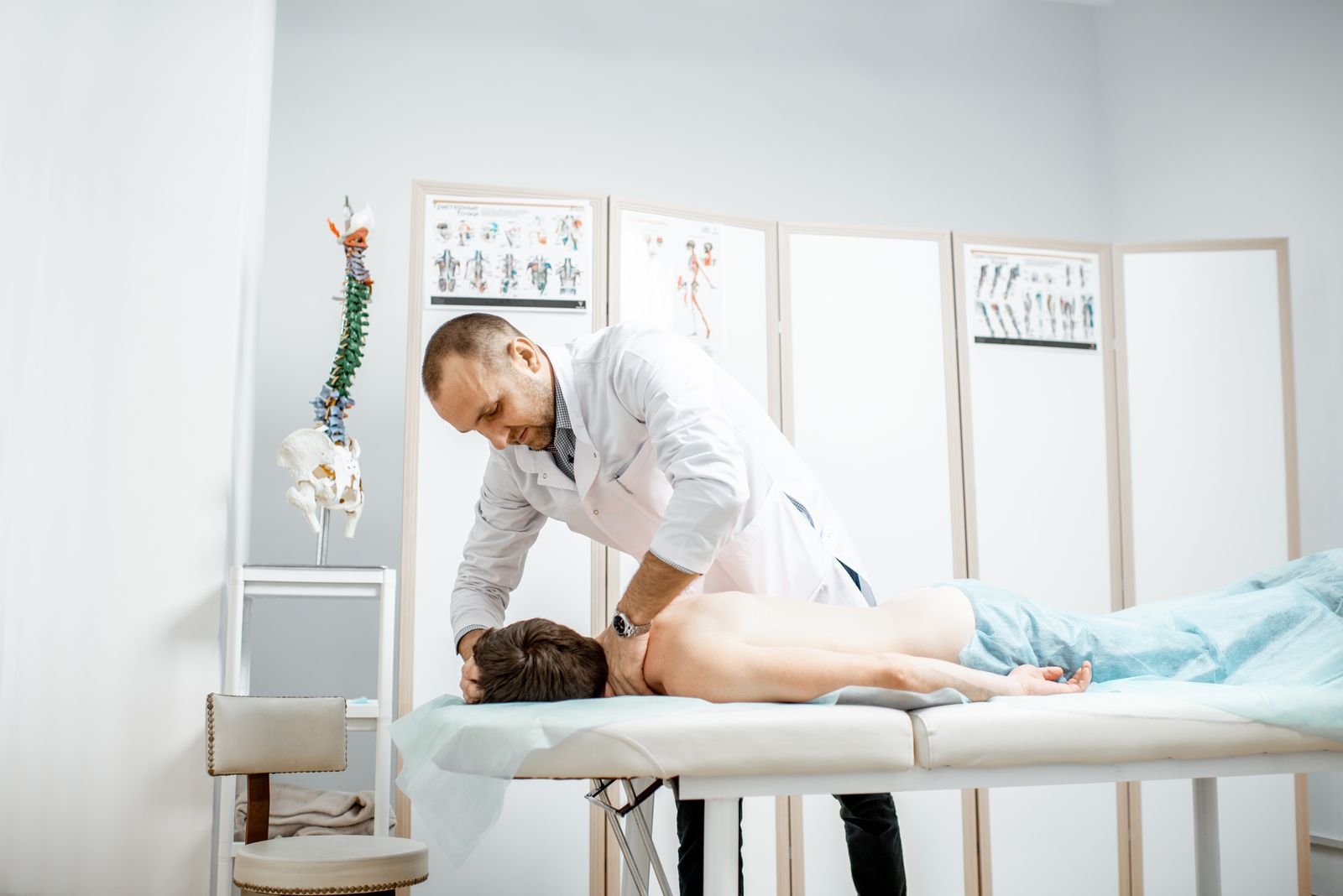
Mid-back and rib pain can feel sharp and alarming, especially with a deep breath. It is rarely serious, and most cases settle well with the right assessment, hands-on treatment and a graded return to movement.
Mid-back pain is pain in the thoracic spine, the twelve vertebrae between the neck and the low back where the ribs attach. When one of the small joints where a rib meets the spine becomes irritated, pain can catch sharply with a deep breath, a cough or a twist. It feels dramatic, but it is usually mechanical and treatable.
Long hours at a desk load the thoracic spine and it slowly stiffens, so the rib joints and surrounding muscles take more strain than they are built for. Because rib pain can wrap around the chest, it often feels alarming. Once serious causes are ruled out, most cases respond well to hands-on treatment and specific mobility work.

Treatment for mid-back and rib pain is billed as physiotherapy, chiropractic or massage therapy and is covered by most extended health plans, with no doctor referral needed for most plans. If your pain follows a car accident, ICBC pre-approves up to 25 physiotherapy visits. We bill your insurer directly wherever your plan allows.

Thoracic and rib pain has a recognizable pattern. Most people describe some mix of the following, often worse after a long day at the desk or a sudden twist.
A catching stab beside the spine when you breathe in fully.
Turning to check a blind spot or reach behind hurts.
The area between your shoulder blades feels locked and tight.
Discomfort that follows a rib from the spine toward the chest.
Aching that builds through long hours of sitting and screens.
One spot beside the spine is sore when pressed.
A small number of presentations need immediate medical attention rather than physiotherapy. Chest symptoms in particular should be checked medically first. Seek urgent care if you notice:
Most cases trace back to how the thoracic spine and ribs have been loaded, not to damage.
Hours of sitting round the mid-back forward and it gradually loses rotation and extension. Stiff segments push extra work onto the rib joints and surrounding muscles, which become irritated and painful, often without any single injury you can point to.
Most commonEach rib meets the spine at a small joint that moves with every breath. A sudden twist, an awkward lift or a hard cough can irritate one, causing sharp, well-localized pain that catches with deep breaths and rotation.
The muscles between and alongside the ribs can strain with lifting, racquet sports, rowing or a heavy bout of coughing. Strains ache with movement and deep breathing, and they usually settle steadily over a few weeks with graded activity.
A new gym program, a weekend of yard work or a spike in training can overload joints and muscles that were not conditioned for it. The pain often appears a day or two after the activity rather than during it.
After illness, stress or long stretches of shallow breathing, the ribs move less than usual. Reduced rib movement lets the joints stiffen, so the next deep breath, sneeze or laugh can feel surprisingly sharp until normal motion returns.
Like every joint, the thoracic and rib joints show wear with age. These changes are normal and often painless, but a stiff segment can flare after unaccustomed activity, and it tends to respond well to graded movement and mobility work.
We screen first for anything that needs medical care, then test how your thoracic spine, ribs and breathing move to find the segments driving your pain.
You will know what is irritated, why deep breaths hurt and what recovery is likely to look like. Understanding that the pain is mechanical takes much of the worry out of it.
Manual therapy, joint mobilization and soft tissue work settle the irritated joints and muscles, restore rib and thoracic movement, and make breathing and rotation comfortable again.
A short exercise program builds thoracic rotation, extension and strength, with desk setup changes and movement breaks so the stiffness that started the problem does not rebuild.
Most rib joint irritations and muscle strains settle in three to six weeks with treatment and graded activity. Longstanding thoracic stiffness takes longer to change, so we often keep building mobility after the pain has eased. Timelines vary from person to person.

Your plan is built around your assessment. For thoracic and rib pain it typically draws on these clinic services.
Assessment, joint mobilization, exercise and education form the core of care, restoring thoracic movement and settling irritated rib joints.
Precise adjustment and mobilization of stiff thoracic segments can restore rotation and extension and ease the load on the rib joints.
Registered massage releases the paraspinal and rib cage muscles that guard and tighten around a sore segment, easing pain with breathing.
Fine needles release deep trigger points in the muscles along the spine and between the ribs that resist stretching and massage.
Cupping lifts and decompresses the tissue over the mid-back, easing muscle tension and improving comfort with breathing and rotation.
A kinesiologist coaches the strength, posture and movement habits that keep your thoracic spine mobile once the pain has settled.


Our friendly team is happy to help. Reach us during clinic hours. We are open 8:00am to 8:00pm on Tuesday and Thursday, and 9:00am to 6:00pm on Monday, Wednesday, Friday, Saturday and Sunday.
Book an appointmentEach rib connects to the spine at a small joint that moves every time you breathe. When one is irritated, the stretch of a deep breath pulls on it and causes a sharp catch. As the joint settles, breathing becomes comfortable again.
You cannot always tell from symptoms alone, which is why we screen carefully at your first visit. Pain that changes with movement, breathing or pressure on one spot is usually mechanical. Chest pain with exertion, shortness of breath or sweating needs medical assessment first, not physiotherapy.
Ribs do not truly go out of place, but a rib joint can become irritated and stop moving well, which feels stuck. Treatment restores normal movement rather than putting anything back, and that matters because it means the joint is not damaged.
Usually not. Imaging rarely changes the plan for mechanical mid-back and rib pain, and we assess your movement directly. If your history suggests trauma, fracture risk or anything beyond a mechanical problem, we will refer you to your doctor for imaging first.
Yes, and staying active generally helps. We will suggest changes to your setup, regular movement breaks and a few mobility exercises you can do during the day, so desk hours stop feeding the stiffness that drives the pain.
New Ray Physiotherapy and Health Clinic is open 8:00am to 8:00pm on Tuesday and Thursday, and 9:00am to 6:00pm on Monday, Wednesday, Friday, Saturday and Sunday, with direct billing to most plans and no referral needed for most extended plans.