Not every headache starts in the head. Many begin in the neck, and those respond well to careful assessment, hands-on treatment and specific exercise.
A cervicogenic headache is head pain referred from the joints and muscles of the upper neck, usually felt on one side and often starting at the base of the skull. Tension-type headaches, the most common headache of all, produce a band-like pressure closely linked to neck and shoulder muscle tension. Both respond well to physiotherapy.
Migraine is different. It is a neurological condition, and physiotherapy is not a cure for it. What treatment can do is settle the neck dysfunction that triggers or worsens attacks in many people, and research supports physiotherapy as part of a plan to reduce how often migraines occur and how severe they feel.
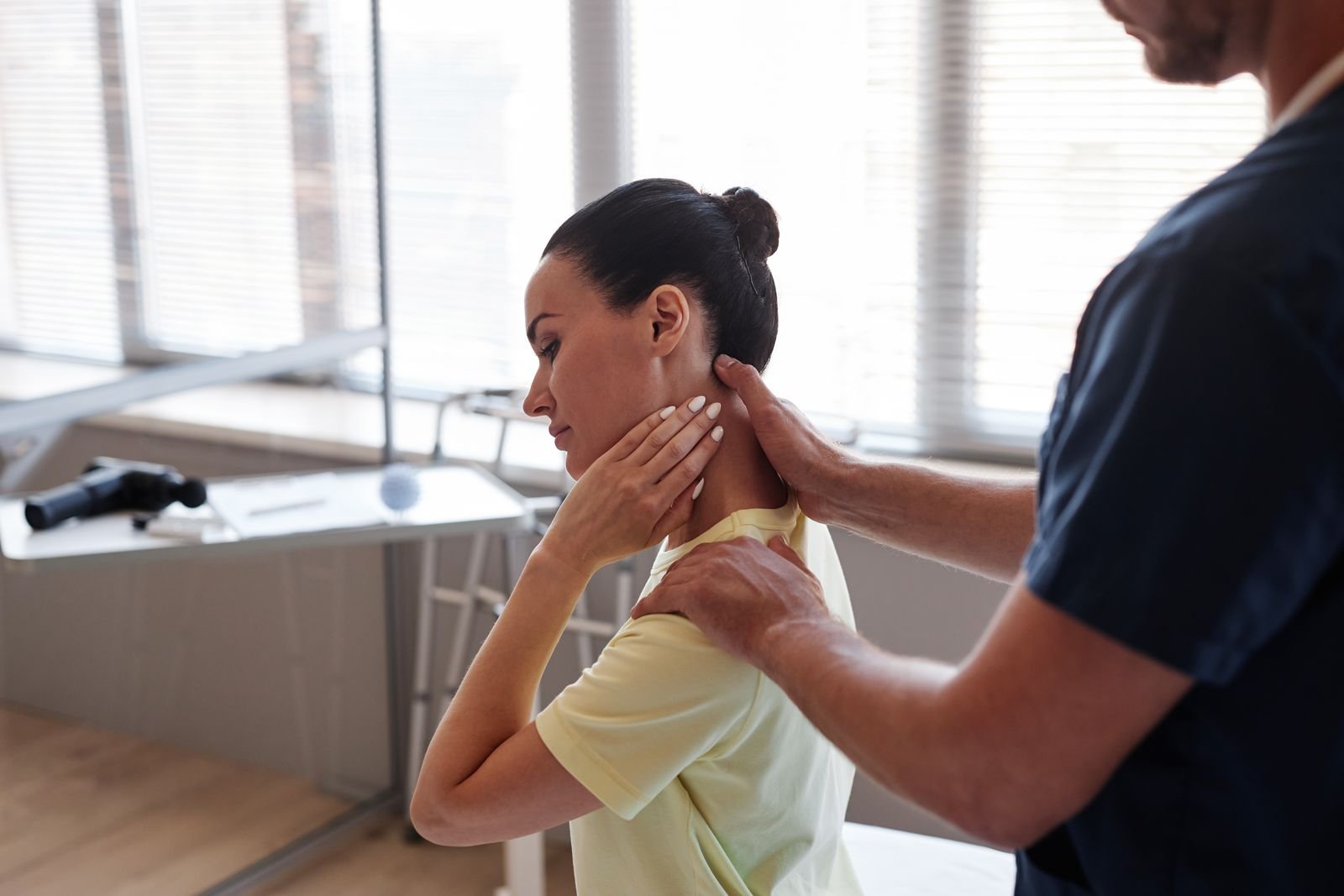
Physiotherapy for headaches is covered by most extended health plans, and most do not require a doctor's referral. If your headaches began after a car accident, ICBC pre-approves up to 25 physiotherapy visits, and WorkSafeBC covers treatment where a workplace claim applies. We bill all three directly.

Cervicogenic and tension-type headaches follow recognizable patterns. You do not need to match every one of these, but the more that sound familiar, the more likely your neck is involved.
A deep ache spreads from the upper neck into the head
Cervicogenic headaches usually stay on the same side each time
Tension-type headaches feel like a tight band around the head
Turning the head or holding one posture can set it off
Desk time and screens often make it worse by afternoon
Throbbing pain with nausea or sensitivity to light and sound
A small number of headaches need immediate medical attention rather than physiotherapy. Go to an emergency department, or call 911, if any of the following apply to you.
Most neck-related headaches trace back to a handful of causes, and several of them often overlap in the same person.
The joints of the top three neck vertebrae share nerve pathways with the head. When these joints become stiff, irritated or overloaded, pain is referred upward and is felt as a headache rather than as neck pain.
Most commonLong hours at a screen load the small muscles at the base of the skull and let the deep neck stabilizers weaken. That combination is one of the most reliable ways to build an afternoon headache.
Stress shows up physically in the jaw, neck and shoulders. Sustained muscle tension in these areas is central to tension-type headache, which is why busy or stressful stretches of life often come with more of them.
Headache is one of the most common symptoms after a car accident or a fall. Injured upper neck joints and muscles can keep referring pain into the head long after the original incident.
Migraine itself is neurological, not mechanical. But neck pain is one of its most common companions, and for many people neck dysfunction acts as a trigger, which is exactly where physiotherapy can help.
The jaw and upper neck work as one system. Clenching, grinding and TMJ dysfunction feed tension into the same muscles that produce headaches, so stubborn cases sometimes need the jaw treated too.
A detailed history of your headaches, an examination of your upper neck, jaw and posture, and careful screening for anything that needs medical care rather than physiotherapy.
We tell you which type of headache you most likely have, what is driving it and what treatment can realistically do, including honest limits for migraine.
Manual therapy to restore movement in the upper neck joints, along with soft tissue work for the muscles at the base of the skull, shoulders and jaw.
Specific exercise to build endurance in the deep neck muscles, plus practical changes to desk setup, sleep position and stress habits that keep headaches from returning.
Many people notice a difference within the first two or three visits. Neck-related headaches typically settle over four to eight weeks of treatment and exercise. Migraine progress is more gradual, and is measured in fewer and milder episodes over a few months.

Your plan is built around your assessment findings. These are the approaches we draw on most often for headaches.
Manual therapy for the upper neck combined with targeted exercise, the core of care for cervicogenic and tension-type headaches.
Registered massage therapy works through the neck, shoulder and skull-base muscles that hold the tension behind many recurring headaches.
Fine needles release tight trigger points in the upper trapezius and suboccipital muscles, two common pain generators in headache.
A well-studied option for tension-type headache and migraine prevention, used alongside hands-on treatment as part of a broader plan.
Chiropractic assessment and adjustment of the neck and upper back can complement physiotherapy when joint restriction is a main driver.
When clenching or jaw dysfunction feeds your headaches, focused treatment of the jaw muscles and joint can help settle them.


Our friendly team is happy to help. Reach us during clinic hours. We are open 8:00am to 8:00pm on Tuesday and Thursday, and 9:00am to 6:00pm on Monday, Wednesday, Friday, Saturday and Sunday.
Book an appointmentPhysiotherapy is not a cure for migraine, and we will never tell you otherwise. What it can do is treat the neck dysfunction that triggers or worsens attacks, and many people find their migraines become less frequent and less intense as a result.
Common signs are pain on one side that starts at the base of the skull, headaches provoked by neck movement or long postures, and a stiff, tender upper neck. In assessment we can often reproduce your headache by pressing on specific neck joints, which confirms the link.
Most neck-related headache plans run four to eight weeks, usually starting weekly and spacing out as you improve. We reassess as we go, and if you are not progressing as expected we will tell you and adjust the plan or refer you on.
No referral is needed to book, and most extended health plans do not require one for physiotherapy either. We bill most major insurers directly, so in many cases you only pay any portion your plan does not cover.
Headache is one of the most common whiplash symptoms, and it responds well to the same neck-focused treatment. ICBC pre-approves up to 25 physiotherapy visits after an accident, we bill ICBC directly, and you can book without seeing a doctor first.
Book an assessment at New Ray Physiotherapy and Health Clinic in Abbotsford. We are open 8:00am to 8:00pm on Tuesday and Thursday, and 9:00am to 6:00pm on Monday, Wednesday, Friday, Saturday and Sunday and we bill most insurers directly.